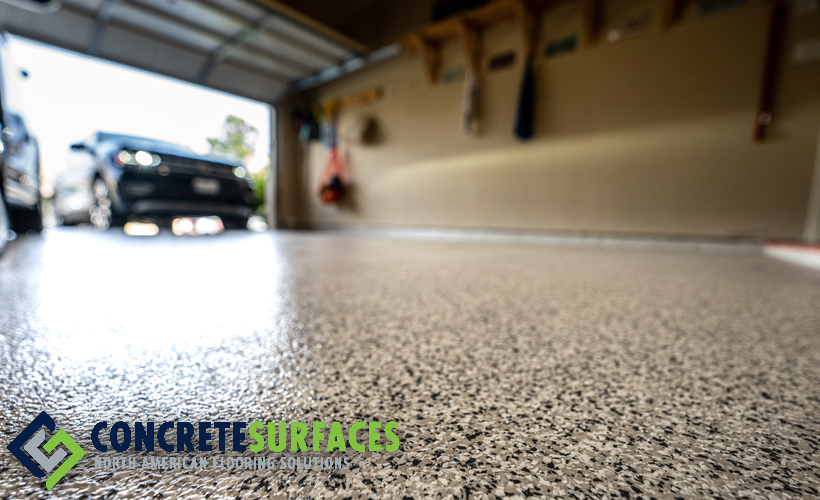
The world of garage floor coatings goes well beyond basic garage floor paint. Choosing a garage floor coating today means comparing proven resinous floor coating systems that protect your concrete floor, improve the appearance of your garage, and hold up for years. This guide to garage floor coatings breaks down the pros and cons of each type of coating so you can find the best garage floor coating for your needs. Canadian Concrete Surfaces has installed these floor systems for over 25 years across Windsor, Essex County, and surrounding Ontario communities. That hands-on experience shows us which coating materials and coating products perform best in real Canadian conditions, from summer heat to harsh freeze-thaw winters.
Garage Floor Paint vs. Professional Garage Floor Coatings
It helps to start with why floor paint falls short. Garage floor paint sits on top of the concrete without forming a chemical bond. It scratches easily, peels under hot tires, and wears thin within a season or two. While garage floor paint costs less upfront, it offers little protection and needs frequent touch-ups. Professional garage floor coatings use resin-based products that bond directly to prepared concrete. The result is a durable surface that lasts 10 to 20 years with minimal upkeep.
Epoxy Garage Floor Coating: The Proven Choice
An epoxy garage floor coating is a two-part resin that hardens into a tough, chemical-resistant layer over your concrete garage floor. Epoxy has been the standard type of coating for residential and commercial floor coating applications for decades, and it remains popular for good reason.
Strengths of Epoxy Garage Floors
Each type of epoxy bonds well to properly prepared concrete and delivers strong chemical resistance at a lower price point. Epoxy coating systems come in solid colours, flake blends, and metallic finishes, so you can match the look to your style. High-quality formulations with 85% or higher volume solids produce a thick, quality floor that stands up to foot traffic, tool drops, and automotive fluid spills.
For DIY homeowners, garage epoxy kits are easy to find and forgiving to apply. The slower set time (around 25 minutes) gives you room to spread the material evenly. This makes epoxy a practical flooring option for budget-conscious projects.
Limitations of Epoxy
Garage epoxy does have clear drawbacks. It is rigid, so it can crack if your concrete floor shifts or settles. Epoxy also yellows and turns brittle with UV exposure. Garages that get regular sunlight will show discoloration faster. Most epoxy garage systems need two to four days of cure time before you can drive on them, and cold weather pushes that timeline longer.
Polyaspartic Floor Coating: Speed and Durability
Polyaspartic coatings are a modified type of polyurea first developed in the 1990s to protect steel bridges from corrosion. Today, a polyaspartic floor coating is one of the top choices for residential garage floors. Canadian Concrete Surfaces uses polyaspartic systems for homeowners who want fast floor installation, lasting colour stability, and a glossy finish that holds up year after year.
Why Polyaspartic Stands Out
A professional crew can complete an entire polyaspartic floor system in a single day. You can walk on the surface within hours and park your car in the garage within 24 hours. When comparing polyaspartic vs epoxy, the speed advantage is obvious.
Key advantages of polyaspartic coatings include:
- UV stability that prevents yellowing, even in sun-exposed garages
- Higher scratch and abrasion resistance than standard epoxy
- Low VOC content with very little odour during installation
- Flexibility that resists cracking from concrete movement and temperature changes
- A lifespan of 15 to 20 years or longer with proper care
Each polyaspartic coating offers more value over time. The higher upfront cost pays for itself through faster return to service and a longer-lasting finish.
Polyurea Floor Coatings: Maximum Flexibility
Polyurea is a two-part compound in the polyurethane family. Among polyurethane coatings, polyurea stands out for its elastic bond with concrete. It absorbs impact and resists chipping better than rigid coatings. Many professional coating systems use polyurea as a base coat because it grips the slab tightly and flexes with the concrete.
How Polyurea Differs from Polyaspartic
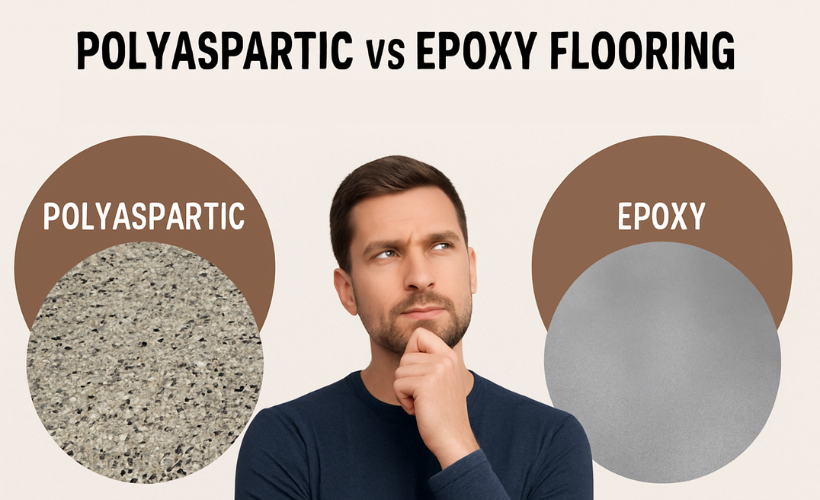
All polyaspartic coatings are technically a type of polyurea, but not all polyureas are polyaspartic. Standard polyurea uses aromatic hardeners that turn yellow under UV light. Polyaspartic uses aliphatic hardeners that stay UV stable and hold their colour. Polyurea cures very fast, sometimes in minutes. That speed helps professionals but makes DIY application extremely difficult.
The Polyurea/Polyaspartic Hybrid System
Many professional installers, including Canadian Concrete Surfaces, pair these two coatings together for the best results. A polyurea base coat provides flexibility and impact resistance. A polyaspartic top coat adds UV protection, scratch resistance, and a high-gloss finish. This hybrid coating setup is often considered the right floor coating for homeowners who want the best of both polyaspartic and epoxy alternatives in one garage flooring solution.
Polyurethane Garage Floor Coatings
Polyurethane garage floor coatings work as high-performance topcoats in many professional systems. Polyurethane coatings add abrasion resistance, chemical resistance, and a smooth finish over epoxy or polyurea base layers. A polyurethane coating for your garage also provides good UV resistance when made with aliphatic chemistry, making it a solid choice for garage spaces that get direct sunlight. Urethane cement, a related product, handles extreme temperatures and heavy impact in industrial settings. Canadian Concrete Surfaces installs urethane cement systems for commercial clients across Windsor-Essex, Chatham-Kent, and Sarnia.
MMA (Methyl Methacrylate) Coatings
MMA coatings cure in as little as one to two hours, even in sub-zero temperatures. That speed makes MMA a strong fit for cold-storage facilities, loading docks, and any floor project where downtime must stay short. MMA gives off a strong odour during application but produces a hard, chemical-resistant surface once cured.
Polished Concrete: A Coating Alternative
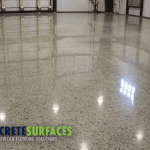
Not every concrete garage floor needs a coating. Polished concrete grinds and refines the existing slab into a smooth, glossy finish that resists dust, stains, and moisture. This flooring option works best on slabs in good structural condition and gives your garage space a clean, modern look. Canadian Concrete Surfaces provides polished concrete as flooring for your garage when a separate coating is not needed.
Choosing the Right Floor Coating
Choosing the best garage floor coating comes down to a few key factors. Here is how the main garage floor coating options compare.
| Feature | Epoxy | Polyaspartic | Polyurea | MMA |
|---|---|---|---|---|
| Cure Time | Slow (24+ hours) | Very Fast (1 hour) | Fast | Very Fast (1–2 hours) |
| UV Stable | No (Yellows) | Yes | Varies | Yes |
| Durability | High | Very High | High | Very High |
| Cost | Lower | Higher | Moderate/High | Higher |
| Installation | Professional Installer | Expert Required | Expert Required | Expert Required |
Surface Preparation
No coating system will last without proper surface preparation. Grinding or shot-blasting the concrete floor creates a rough profile that lets the coating grip at full strength. This step is the most important part of any garage epoxy installation or polyaspartic application. Applying a coating over unprepared concrete leads to peeling, bubbling, and early failure.
Epoxy vs Polyaspartic: Key Differences
When choosing between epoxy or polyaspartic, think about what matters most to you. Epoxy and polyaspartic serve different needs. Epoxy costs less upfront and works well for DIY projects. Polyaspartic costs more but cures in one day, blocks UV damage, and lasts far longer. Choosing the right floor depends on your budget, your timeline, and how hard your garage works.
Best Fit by Situation
- Budget-friendly DIY: Epoxy kits offer easy application at lower cost
- Fast professional installation: Polyaspartic systems finish in one day
- Cracked or shifting concrete: Flexible polyurea coatings absorb movement without breaking
- Sun-exposed garages: Polyaspartic stays colour-fast with full UV resistance
- Heavy industrial use: Urethane cement handles extreme conditions
- Cold-weather projects: MMA cures reliably in freezing temperatures
Transform Your Garage with the Right Coating
Choosing the best coating starts with understanding the types of garage floor coatings available and matching them to your garage interior needs. Whether you want to upgrade the look of your garage with a metallic epoxy floor or need a long-lasting garage flooring solution, the right floor makes all the difference. Canadian Concrete Surfaces helps homeowners and businesses across Windsor, LaSalle, Tecumseh, Leamington, Chatham-Kent, Sarnia, and Essex County find the right coating options and the right floor coating for every situation. Which garage floor coating is best for your project?

Contact Canadian Concrete Surfaces today for a free consultation. Let us help you find the quality floor that will transform your garage for years to come.

Devon has over 25 years of experience providing customers with high performance epoxy flooring to fit any need or budget. Referrals are our best friend and customer satisfaction is always our top priority. When Devon is not working you can find him fishing, or hunting across North America.
Share This Article
Choose Your Platform: Facebook Twitter Google Plus Linkedin